


Autonomous systems are arriving. They must be bounded.
Karta exists because the autonomous future is arriving whether we participate or not. The choice is not whether autonomous systems fly. It is whether they fly under doctrine that is auditable, constrained, and built for the field they will see.
We are not building one category-leading vehicle. We are building the operational autonomy layer underneath autonomous systems, the navigation, decision and integration stack that turns hardware into a safe, auditable teammate.
Bounded autonomy
Every autonomous action is constrained by an operator-approved doctrine. The system surfaces what it cannot do as clearly as what it can.
Integration discipline
Hardware, software, doctrine and sustainment are one product. We do not ship anything we cannot maintain in the envelope it will fly.
Audit by design
Every decision the system makes is logged at telemetry-frame granularity. After-action review is not a feature - it is the substrate.
Allied-export discipline
Engineered for the doctrines we ship under, with export pathways consistent with allied use only.
The denied environment is where autonomy earns its keep.
Real operations are defined by what fails. GPS, comms and operator attention degrade, usually together. One route from take off to landing, three fault zones, and a mission that completes anyway.
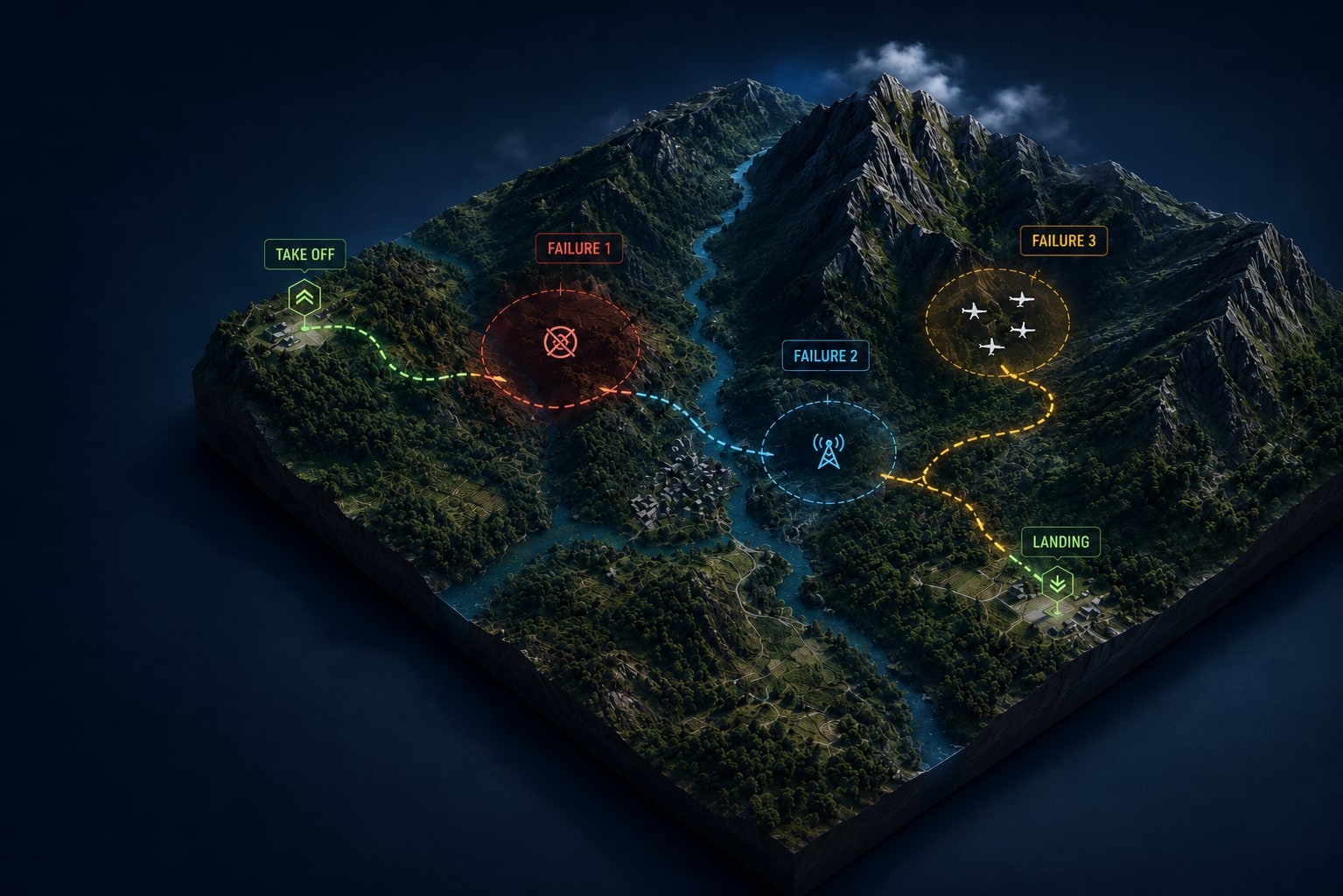
Fault conditions
01 · No GPS area
Navigation continues on vision and terrain matching alone.
02 · Comms jammed
The aircraft flies its plan and reports back when the link returns.
03 · Multiple aircraft
One operator supervises the flight; deconfliction is automatic.
- 72.4 km
- Distance
- 01:42:00
- Duration
- 1,850 m
- Max elevation
- Clear
- Weather
- 12 kts NE
- Wind
What we will build. What we will not.
We treat doctrine as a product surface. The bounds below are not preferences - they are constraints in the codebase, in the integration tests, and in the procurement contracts.
Bounded autonomy
Every decision the vehicle makes is constrained by an operator-approved doctrine. The system surfaces what it cannot do as clearly as what it can.
Auditability
Every flight produces a structured record of what was sensed, what was reasoned, and what was acted on - at telemetry-frame granularity.
Human-on-the-loop
Operators stay in command, even at fleet scale. Karta builds for cognitive bandwidth, not its replacement.
Allied-export discipline
Engineered for the doctrines we ship under, with export pathways consistent with allied use only.
Targeting autonomy
The vehicle does not select what to engage. Target selection remains a human act, governed by published rules of engagement.
Opaque models
No black-box decision making in the kill chain. If a model contributes to an operational decision, its inputs and confidence are exposed.
Mass-effect speculation
We do not pursue capabilities whose only credible use is indiscriminate effect.
Sustainment shortcuts
We do not ship systems we cannot maintain in the theatres they will fly. Spares, training, and updates are part of the product.
Engage with the team. Or join it.